Quick Answer
Refugees and protected persons can claim the Disability Tax Credit if they are residents of Canada for tax purposes, hold a SIN, and have a severe and prolonged impairment certified on Form T2201. Citizenship is not required. Even on a low income, the credit can transfer to a working family member, and DTC approval can open the RDSP and the Child Disability Benefit.
The short answer
Refugees and protected persons (as defined in the Immigration and Refugee Protection Act) can claim the DTC if they are residents of Canada for tax purposes, have a SIN, and have a severe and prolonged impairment certified on Form T2201. Immigration status itself is not a barrier, residency for tax purposes and a SIN are what matter.
Who counts as a "protected person"
A protected person is a status recognized under Canadian immigration law. It includes people granted protection by IRCC or the Immigration and Refugee Board (IRB), resettled refugees, and refugee claimants with valid status. Many in this situation hold a SIN that begins with the number 9 (a temporary SIN), which is fully acceptable for the DTC. You do not need to wait for permanent residence or citizenship to begin.
Are you a tax resident?
Refugees and protected persons living in Canada, with a home here, family, and growing community ties, typically become tax residents quickly, often from the time they arrive and settle. Filing a tax return, even with little or no income, is what puts you in the system for DTC review and related benefit interactions. The full residency test is on our pillar guide: DTC for newcomers and temporary residents.
The bigger picture: programs connected to DTC approval
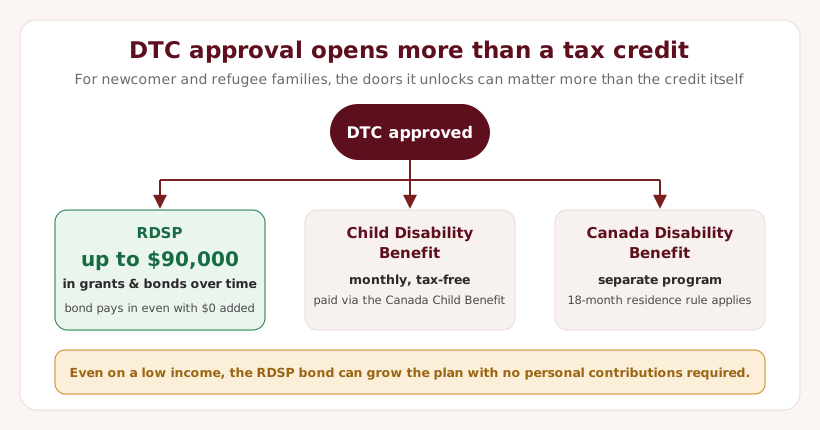
For this community the DTC is often valuable less for the credit itself and more for the related programs it may support. Once approved, a person may be able to access:
- The Registered Disability Savings Plan (RDSP), with government grants and bonds.
- The Child Disability Benefit, a monthly, tax-free amount for families with a child who qualifies.
- The Canada Disability Benefit (subject to its own rules, including an 18-month temporary-residence requirement).
For a low-income family, these related program interactions can be worth more over time than the tax credit alone.
Worked example: the Al-Rashid family
The Al-Rashids are newly arrived protected persons. One parent works part-time with modest tax withheld, and their young child has a qualifying disability. The child's DTC, plus the child supplement (about $845 federally), can transfer to the working parent on line 31800. DTC approval may also support access to the Child Disability Benefit, paid monthly and tax-free through the Canada Child Benefit when program rules are met. So even on a modest income, the household may see ongoing support.
Why a low income still works: a non-refundable credit needs tax to reduce, so the unused amount moves to the parent who pays tax. The plain-language explanation is on the pillar guide.
The RDSP opportunity: up to $90,000 in grants and bonds
The RDSP deserves its own section because it is the part most newcomer families do not know about. Once a person is DTC-approved and opens an RDSP, the federal government can contribute through two programs:
- The Canada Disability Savings Grant, which matches personal contributions (up to generous annual and lifetime limits).
- The Canada Disability Savings Bond, which pays into the plan for low-income beneficiaries even if the family contributes nothing.
Combined, these can add up to a lifetime maximum of around $90,000 in government money for an eligible beneficiary over time. For a family with very little to spare, the bond in particular means the plan can grow without out-of-pocket contributions. Our RDSP guide explains how it works.
How settlement agencies and community health centres can help
You do not have to navigate this alone, and using help is encouraged:
- Settlement agencies often help newcomers file a first tax return, apply for a SIN, and understand benefits, the steps that make the DTC possible.
- Community health centres and family clinics routinely complete Form T2201 for patients, and they can review records you bring from your home country.
- Interpreters are frequently available through these services if English or French is not your first language.
If you work with a settlement counsellor, they can often coordinate these steps together so nothing falls through the cracks.
Your doctor is overseas, can they certify the form?
Many people in this situation were diagnosed before arriving in Canada. Your foreign medical records are valuable supporting evidence, but a Canadian-licensed practitioner must complete Part B of the T2201. Under Income Tax Act s.118.4(2)(b) the certifier must be authorized where the taxpayer resides or in a province, and claiming the DTC requires Canadian tax residency. Community health centres do this regularly. Full detail is on the pillar guide.
Claiming for past years
Once approved, you may be able to claim retroactively for the years you were a Canadian tax resident (up to 10 years), using Form T1-ADJ. Years before you arrived do not count, but your resident years in Canada can. See our retroactive DTC claims guide.
What you'll need to get started
- A SIN (a temporary SIN beginning with 9 is fine).
- A filed tax return, even if your income is low or nil.
- Form T2201 completed by a Canadian-licensed practitioner, supported by any records from abroad.
- If transferring the credit, the supporting family member's information for line 31800.
Frequently Asked Questions
Yes, if they are a resident of Canada for tax purposes, hold a SIN, and have a severe and prolonged impairment certified on Form T2201. Citizenship and permanent residence are not required.
A status defined under the Immigration and Refugee Protection Act, granted by IRCC or the Immigration and Refugee Board. Protected persons can access certain tax credits and benefits, including the DTC where they meet the residency and SIN requirements.
Yes. The unused amount can transfer to a working family member who pays tax, and approval may support access to the RDSP and the Child Disability Benefit when program rules are met, valuable even on a low income.
A Canadian-licensed practitioner must certify Part B of Form T2201. Records from your home country can support the application but cannot replace the Canadian certification.